Mental Health
Clean House, Empty Progress: What Procrastination Is Really Telling You
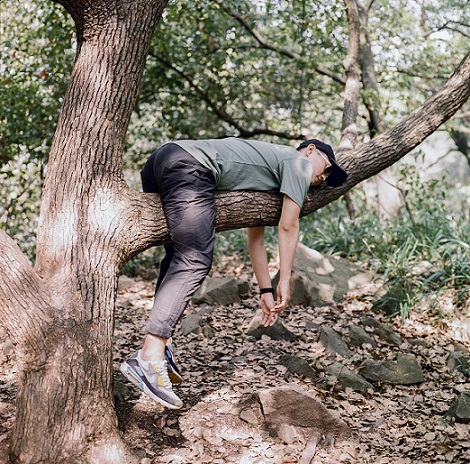
"Don't wait. The time will never be just right." Napoleon Hill
You've spent the afternoon reorganising drawers, scrubbing the kitchen until it sparkles, folding laundry with military precision. Your home has never looked better.
The important project — the career step, the difficult conversation, the thing that actually matters — remains untouched.
This is the cleanest house syndrome. Productive procrastination. It feels virtuous, even industrious. But real progress stays empty.
Most of us know this feeling. A 2020 survey of 1,000 British adults found that 84% have experienced procrastination to some degree, and over half believe it has meaningfully affected their life (Gallagher, 2026). Globally, around one in five adults identifies as a chronic procrastinator — and the numbers are remarkably consistent across cultures. What differs is everything else.
I've been sitting with procrastination a lot lately — partly because I'm running a 7-Day Procrastination Challenge starting soon, and partly because the more I examine it, the more I believe we've been misreading it entirely.
We treat it as a discipline problem. A willpower failure. Something to manage, hack, or push through.
But what if it's a signal?
What We Do Instead — and Why
When we delay what matters, we don't just sit still. We fill the space. Many have lost the ability to sit in nothing with any contentment. Social media, binge-watching, snacking, napping, gaming — or the particularly insidious version, productive busywork like cleaning the kitchen until it gleams. These behaviours aren't laziness. They're relief. Temporary, yes. But relief from something real.
Research consistently links chronic procrastination to higher stress, anxiety, depression, and lower life satisfaction across almost every domain (Beutel et al., 2016). One survey found that 94% of people say procrastination hurts their happiness (Gallagher, 2026). And yet the behaviour persists — because the comfort it offers is immediate, and the cost is paid later.
The question worth sitting with isn't how do I stop procrastinating. It's: what am I moving away from, and why?
The Cultural Picture Most People Miss
In the UK and much of the Western world, procrastination gets framed as personal failure. We blame discipline, willpower, time management — and then feel guilty about the guilt. That guilt has real weight. It compounds the very cycle we're trying to break.
But look at procrastination through a wider lens and something interesting emerges.
In more collectivist cultures — across much of East Asia, Latin America, parts of Africa, the Middle East, and Southern and Eastern Europe — delays don't carry the same moral charge. They often stem not from solitary avoidance but from relational priorities: family obligations, community duties, the maintenance of social harmony. The delay isn't shameful because it serves something. It has a why behind it (Ferrari et al., 2005).
In Italy or Spain, a more fluid approach to time blends tasks with relationships and present-moment connection. What looks like procrastination to a British observer might simply be a different rhythm — one that prioritises people over schedules, and doesn't treat a missed hour as a moral failing. This is what researchers call polychronic time orientation, common across Southern Europe, Latin America, and much of Africa and the Middle East — fluid, overlapping, relational — in contrast to the monochronic, clock-driven model most of us in the UK operate inside (Dewitte & Schouwenburg, 2002).
When I lived in South Africa, and visited Cape Town either for work or friends, it was a completely different culture than the more central, modern South African cities. There we had to be in 'Cape Time' — which was different to 'normal' time. On one project, we had training with a Spanish company in Cape Town, and we always had a giggle. My office and other similar offices that had flown down for the learning would dutifully arrive at 9am each morning, but the other people would arrive just when they arrived.
In individualistic cultures, procrastination gets tied tightly to self-worth. In relational ones, it's more often tied to context. The self-blame — and its very real drag on wellbeing — is heaviest in the West.
Our Complicated Relationship With Time
Much of the advice we receive assumes time is linear, scarce, and best managed through strict schedules — and definitely not 'Cape Time'. In the UK, USA and much of Northern Europe, this is baked into the culture. Any deviation feels like failure — which amplifies procrastination guilt considerably.
There's also something worth understanding about how we're actually wired. We have an evolutionary tendency called temporal discounting — a hardwired preference for the present over the future. Our brains consistently weigh immediate rewards far more heavily than distant ones (Dewitte & Schouwenburg, 2002). That reward, it's worth adding, doesn't have to mean pleasure — it could equally be social role, sense of duty, or sense of purpose. Some would say dopamine is the reward, but it doesn't fire itself into existence. Interestingly, dopamine is what drives a bee from flower to flower collecting pollen it doesn't personally use or need — but that the whole bee community depends on. This tendency kept our ancestors alive. It also makes sitting down to a long-term project feel faintly unnatural, especially when the phone is right there.
Another thing worth noting: motivation is itself a forward-thinking, futuristic function (Berke, 2018) — and yet animals have it too, and fascinatingly, so do plants (Gagliano, 2018). Which quietly dismantles the idea that we simply need to feel motivated before we act. Motivation doesn't arrive first and action follows. More often, it works the other way around — we act, however small that action, and motivation follows from the doing. Is our advanced futuristic brain, really better than the rest?
This is ancient biology running inside a modern life. Understanding that doesn't excuse avoidance — but it does invite a little more compassion, and a little less war with yourself.
The Deeper Question: What's the Why?
At the heart of most procrastination research — and most of what I see in coaching — is a recurring theme. When actions feel disconnected from any larger purpose, or clouded by too many open questions, avoidance becomes almost automatic.
Friedrich Nietzsche captured this powerfully: "He who has a why to live can bear almost any how." Viktor Frankl lived it inside a concentration camp, watching those who held onto meaning — a task to complete, love for another person, a dignified attitude toward suffering — endure when others couldn't.
The application isn't dramatic. You don't need a life-defining mission. But you do need a thread. We all have things we don't want to do — a task that isn't urgent, a Friday afternoon that's beautiful outside, and something boring sitting in front of us. Perhaps the question worth asking is: how do some people choose the boring over the beautiful, and why?
Try this experiment. Think of something you genuinely love — a hobby, time with someone close, a creative pursuit. Notice how difficult it is to procrastinate on it. The pull is almost magnetic — not because you have more willpower, but because you have more reason. Now contrast that with a task that feels pointless, disconnected from anything larger. Without that energy, motivation rarely arrives through effort alone.
My Garden, and What It Taught Me About All of This
I'll share something personal here.
A few years ago, weeds started taking over my garden. I cut them back and they returned. I cut them back again and they returned again, with more haste each time. Eventually, feeling frustrated, I left them — and they grew taller than me. And I'm five foot, so that's saying something. People told me I was lazy, dirty, neglectful. The pressure was enormous, and it caused me genuine distress. Every expert I turned to said the same thing: weed killer, or keep cutting.
I just couldn't bring myself to use weed killer. I didn't fully know how to explain that — but something in me resisted it deeply, even as the distress grew and the judgment from others intensified.
So, I kept searching. And eventually I came across a talk by a man called Bill Mollison, and a concept I'd never heard of: permaculture. It wasn't a quick fix. It was a whole different way of understanding what I was looking at. Not weeds to be destroyed — but a system asking to be worked with. Mollison made a point that stayed with me: that many of the chemical herbicides we use in agriculture today trace their origins to chemical weapons research from the First and Second World Wars — substances developed to harm living things such as the people in concentration camps, later repurposed for the land. That knowledge sat uncomfortably alongside the pressure I was feeling to simply reach for the bottle.
Three years on, grass is growing again. There are birds and animals I'd never seen before. The wood chip and sticks I collect attract spiders, and the birds are genuinely delighted about that. I'm still learning. But I feel so happy.
What I couldn't do through guilt, pressure, or willpower, I did through meaning. The moment I had a real why — not just a tidier garden, but a living, breathing ecosystem — the how became possible.
This is precisely what Frankl was pointing at. And it's what Japanese ikigai offers in its quieter, more honest form.
Ikigai — Purpose Doesn't Have to Be Grand
In Okinawa, one of the world's longest-lived communities, there is no traditional word for retirement. People's ikigai — their quiet reason for waking up — comes from small, ongoing contributions: tending a garden, being useful to a neighbour, caring for family. Daily life and meaningful life aren't separated. Actions feel inherently worthwhile because they serve something beyond the self.
Ikigai is often described as the intersection of what you love, what you are good at, what the world needs, and what sustains you. But importantly, it doesn't have to be grandiose. It can be as quiet as a garden that feeds the birds. A report that supports your team. An effort that honours the resilience you want to model for your children.
Meaning doesn't have to be grand. It just has to be real.
In many relational cultures, this framework is ready-made — purpose flows from your role in family or community, and you don't have to search for your unique passion daily because your contribution is already needed and valued. In more individualistic cultures, we carry more freedom and more searching. That searching, when it stalls, creates a void.
Voids get filled. Often with a very clean kitchen.
Before Any Technique, Start Here
Ask yourself honestly: What task, person, or attitude gives me a reason to move forward today? Not a grand answer. Just a true one.
Link one avoided thing to a larger why, however modest. Research on what psychologist’s call witnessed effort supports this — in donation experiments, people gave significantly more when a pair of eyes, even just an image of eyes, overlooked the collection box. The mere sense that our actions are seen and valued increases effort (Bateson, Nettle & Roberts, 2006). We are social creatures. Meaning flows more easily when it flows toward someone.
Then embrace kaizen — the Japanese concept of small, consistent improvement — rather than waiting for motivation to arrive fully formed. Start before you're ready. Start small. Start even when it feels uncomfortable.
The shift isn't from laziness to discipline. It's from disconnection to meaning.
What's Coming Next
Next week I'm going live to talk about all of this in more depth — the psychology behind why we avoid, what the research actually says, and what genuinely moves people forward. Then the week after, the 7-Day Procrastination Challenge begins. Seven days, one focus each day, building from simple awareness all the way through to a personal system you can actually keep.
This newsletter is the why behind it. The challenge is the how.
If you've been reading this and recognising yourself — the spotless kitchen, the endless scrolling, the tasks that stay untouched — you're exactly who this is designed for.
I'd love to see you there.
Gemma x