— ✦ —
Where it gets strange
But here's where my story gets strange — and where it starts to matter.
I hold an MSc in Applied Psychology. I've trained in CBT, ACT, NLP, Person-Centred approaches, addiction and trauma. That's the formal foundation. But it was never the whole picture, and I knew it.
The thinkers who really woke me up were not on any psychology syllabus.
Caroline Myss’s book Anatomy of the Spirit was the first big opening. Her work as a medical intuitive, together with her raw, honest talks and stories, gave me a completely new lens on energy, illness, personal power, and the deeper reasons we get stuck or heal. She showed me how biography becomes biology in ways no conventional training had touched.
That cracked the door open to other voices that kept expanding the picture:
Oliver Sacks, whose case studies revealed the extraordinary strangeness and beauty of individual minds;
Julian Jaynes, whose theory of the bicameral mind upended assumptions about consciousness I didn’t even know I was making;
Michael Gazzaniga on the split brain, whose research showed me how the different hemispheres and modules of the brain function individually and separately, constantly shaping and sometimes even creating our perception of the world;
Richard Cytowic on synaesthesia, whose work made me realise just how profoundly differently each of us can see and process the world — that what feels like straightforward reality to one person can be a vivid, multisensory symphony to another;
Alan Watts, whose gentle demolition of Western assumptions about the self I return to again and again;
Valerie V. Hunt on the human energy field, whose fascinating studies and open questions about subtle energies dramatically expanded my understanding of how we interact with the world around us;
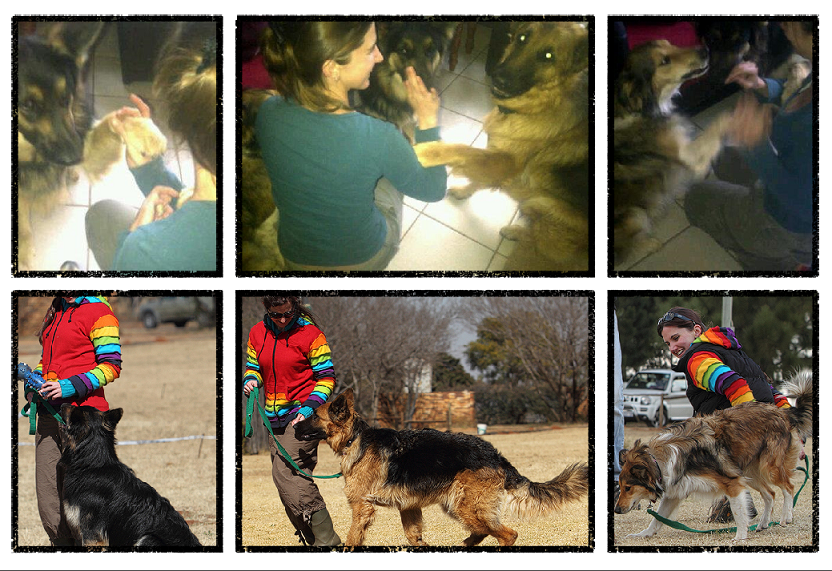
and Rupert Sheldrake, whose research on morphic resonance inspired me with everyday mysteries like how dogs seem to know when their owners are coming home, and the strange sense of being stared at — quietly but insistently asking whether mind might extend beyond the body entirely.
I'd just stepped outside a very small room that most people call reality. And I found I didn't want to go back in.
My first encounter with plant consciousness wasn't through a book. It was a mystical experience the way Carl Jung described (although at the time I did not know this) - a moment of knowing — brief, direct, arriving from somewhere else entirely. The information was simple: plants have senses. The moment my mind received it, it decided I had completely lost the plot. Of all the strange things my brain had produced over the years, this felt like the one that had finally gone over the rocket. I saw, in my mind's eye, a plant with an ear. I genuinely thought: this is it. This is the madness.
A few days — maybe weeks — later, curiosity crept in. I started looking. Then reading. Then reading everything I could find. And there it was: yes, plants have something like eyes. Something like ears. Something like muscles. The science, once you found it, was extraordinary.
But something else came with it — another thought, quieter and stranger: we are like plants. And we don't only have five senses. There is far more going on than we think.
At the time, I could find almost nothing on human senses beyond the standard five. It was only years later that concepts like interoception and proprioception began appearing in mainstream conversation — though I later discovered they had been known outside mainstream science since the 1800s, simply never popularised. The knowledge existed. It had just been left in a room that most people weren't looking in.
One of my favourite stories — and one I love to shock people with — involves a man called Cleve Backster. A CIA interrogation expert who, on a whim, attached his polygraph equipment to a plant. What followed was a series of experiments suggesting that plants respond not just to physical stimuli, but to intention, to threat, even to death occurring nearby. Backster's conclusion: don't commit a crime in a room with a plant. They notice. They remember. They can identify the right candidate.
I tell that story because it opens something. Because it asks: what if the boundaries we've drawn around intelligence, consciousness and connection are far smaller than what's actually here?